
Decoding the EU's 2040 Emissions Deal: Implications for Irish Farmers


Introduction
The European Union has agreed a landmark plan to cut greenhouse gas emissions by 90% by 2040, compared with 1990 levels. It’s an ambitious step, the biggest climate goal ever set by the bloc, and it brings the 2050 “net zero” deadline into much sharper focus.
For Irish farmers, this isn’t abstract policy talk, it’s a very real signal that agriculture will continue to sit at the heart of the climate conversation. The sector still makes up about 38% of Ireland’s total emissions, one of the highest proportions in Europe, which means any new targets hit our industry first.
What It Means on the Ground
When Brussels tightens the rules, Irish farmers feel it, in paperwork, in costs, and often in how we’re judged internationally. The new 2040 goal means more oversight, stricter reporting, and tighter margins for error.
Some of the main takeaways:
- Farm-level scrutiny is set to increase: Ireland’s Climate Action Plan already commits to a 25% reduction in agri emissions by 2030, equivalent to around 5.75 million tonnes of CO₂. The new EU deal could shorten that timeline even further.
- Costs will rise in the short term: Building extra slurry storage, cutting back on chemical fertilisers, or investing in feed additives will all require upfront cash, even if they pay back later.
- Land use will shift: Carbon storage, rewetting, and forestry are now at the centre of farm policy. Expect to see more incentives for biodiversity and less flexibility around land left idle.
- Markets will demand proof: Grass-based efficiency has long been Ireland’s calling card, but the days of reputation alone are gone. Data, audits, and verified sustainability credentials will soon decide who sells where.
Ireland’s Strengths and Weak Spots
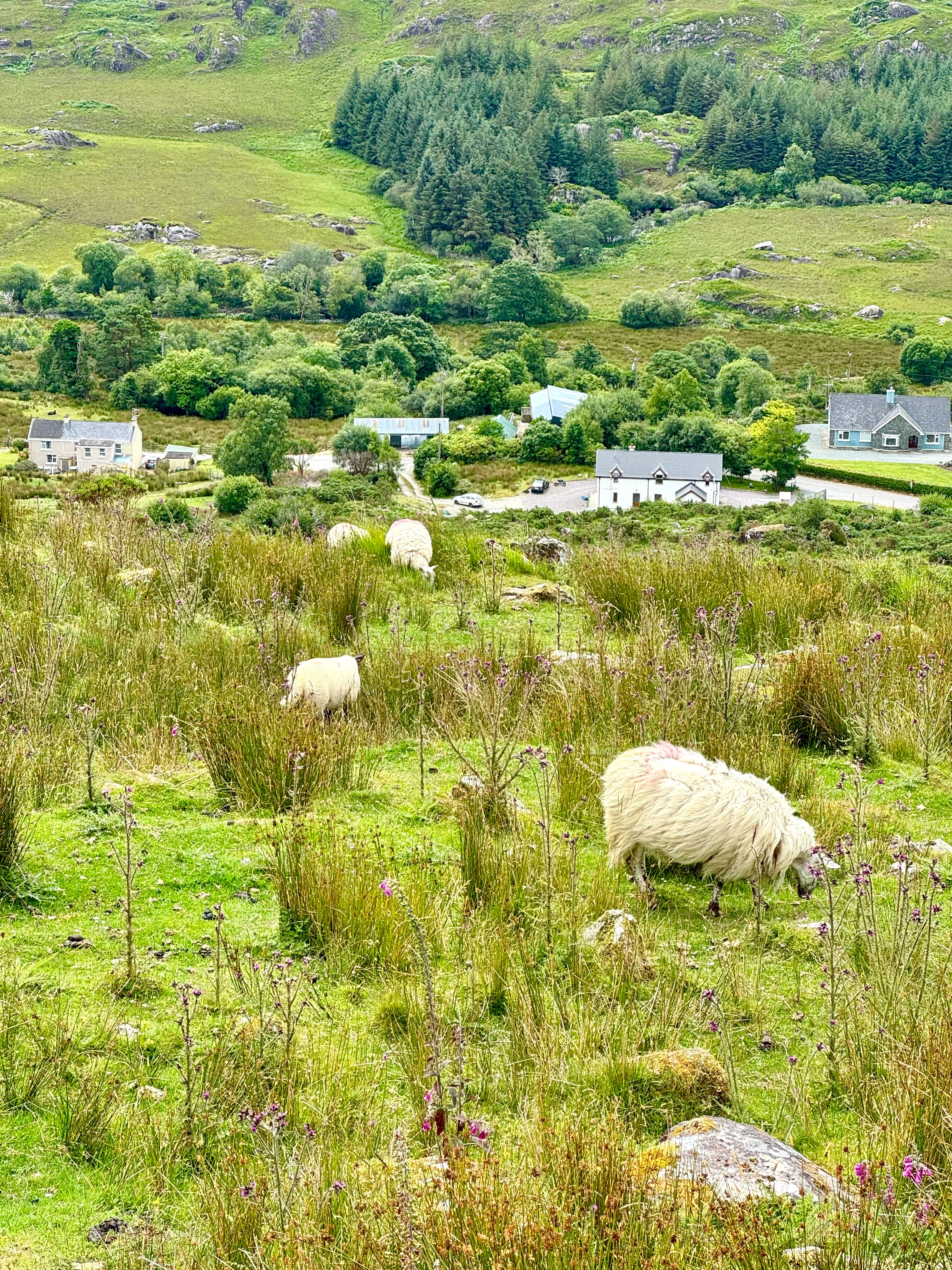
Ireland’s grass-based system gives us a big leg up. Our mild weather, long grazing seasons, and relatively low feed inputs make our farms among the most efficient in Europe. Teagasc data shows Irish dairy produces roughly 0.9 kg of CO₂ per litre of milk, compared to 1.5 kg or more across many EU systems.
But efficiency isn’t immunity. Agriculture is still Ireland’s single largest emitter. Total emissions fell 4.6% in 2023, mainly due to reduced fertiliser use and more liming, a good step, but far from enough. We’ll need sharper cuts year-on-year to stay in line with both national and EU targets.
Can It Really Work?
It’s a huge question, and a fair one. The EU’s 2040 target looks impressive on paper, but implementation is another story. There are plenty of wrinkles still to iron out:
- Flexibility clauses: May allow part of that 90% cut to come from carbon credits rather than real, on-farm reductions.
- Technology gaps persist: Methane inhibitors like 3-NOP and red seaweed show 20–30% methane cuts, but scaling them up across herds is still far off.
- Fairness matters: The smaller family farms that define Irish agriculture can’t absorb the same costs as larger or corporate operations. Without tailored supports, the burden will fall unevenly.
- Funding is finite: Ireland’s €1.5 billion agri-environmental budget (2025–2026) is already stretched across ACRES, forestry, and CAP schemes. Future reforms will need deeper pockets or smarter prioritisation.
Turning Targets into Opportunity
It’s easy to see climate policy as a threat, but there’s real opportunity here too. The global market is pivoting towards sustainable food, and Ireland’s production model already aligns better than most.
The Agricultural Climate Research and Innovation Hub (ACRIH) at Johnstown Castle is a good example of progress. It’s a joint effort by Teagasc, ICBF, and UCD, and it’s finding practical ways to cut emissions at source. Early results show that smarter breeding and improved feed efficiency could reduce methane output by up to 10% nationally, without denting productivity.
On the energy front, the Solar Capital Investment Scheme under TAMS offers up to 60% grant aid for rooftop panels, and microgeneration payments now let farmers sell excess power back to the grid. It’s not just about green credentials, it’s about trimming costs long-term.
Meanwhile, Europe’s planned carbon border adjustment mechanism (a tariff on high-emission imports) could play to Ireland’s advantage. Our grass-fed beef and dairy may soon carry more export weight simply because they’re produced more cleanly than the global average.
That said, finance remains the sticking point. The average family farm income in 2023 was just €43,000, and many beef and sheep farms earned far less. Major upgrades or new tech aren’t realistic for every farmer. If climate policy is to work, supports must be tiered, with grants, credit lines, and advisory help aimed squarely at smaller, lower-income farms. Otherwise, the transition risks widening the gap between the few who can afford to act and the many who can’t.
Done right, though, Ireland could lead Europe’s “fair transition”, showing how to hit climate goals without hollowing out rural livelihoods.
What Farmers Can Do Now
While policymakers debate the fine print, farmers can already take practical, low-cost steps:
- Know your numbers: Tools like Teagasc’s Marginal Abatement Cost Curve (MACC) help identify what measures save the most emissions for the least effort.
- Mind your soil: Lime, clover, and smarter nutrient management cut fertiliser costs and emissions while boosting yields.
- Look at dual-use options: A few acres of trees or wetlands can store carbon and bring biodiversity payments, without cutting stock numbers.
- Invest smartly: Solar panels, better slurry handling, or rainwater collection can save real money while hitting climate targets.
- Stay engaged: The next CAP reform (post-2027) will likely link payments directly to emissions. Knowing what’s coming is the best insurance.
Conclusion
Irish farming has adapted to every storm thrown its way, quotas, CAP cuts, Brexit, and now climate change. This 2040 deal isn’t a death knell; it’s a call to act early and shape the outcome.
Margins are tight, expectations are high, and farmers are tired of feeling like the villains in climate debates. But here’s the truth: Irish agriculture already produces some of the cleanest food in the world. If we double down on that fact, prove it with data, and use policy to back it up, we can keep farming profitable and sustainable.
Because the next decade won’t just be about cutting emissions, it’ll be about proving that family farms still have a central role in Europe’s food future. And if history tells us anything, it’s that Irish farmers don’t wait for change, they figure out how to work with it.
*By Anne Hayden MSc., Founder, The Informed Farmer Consultancy.